

the difference between living a life and having proof of one

some lives now seem to unfold twice. once in reality and once online. couples communicate through instagram stories while sitting in the same house, children grow up with a public archive already forming around them before they’re old enough to understand what an audience is. hospital visits play out like live updates shared in instalments. relationship milestones arrive like tribute posts. private experiences increasingly arrive with audiences attached. i’m not even sure this is good or bad anymore, it just feels strange. like we’re participating in our lives while simultaneously creating a record we lived them. and yet the existence of proof and the existence of an experience are not always the same thing.
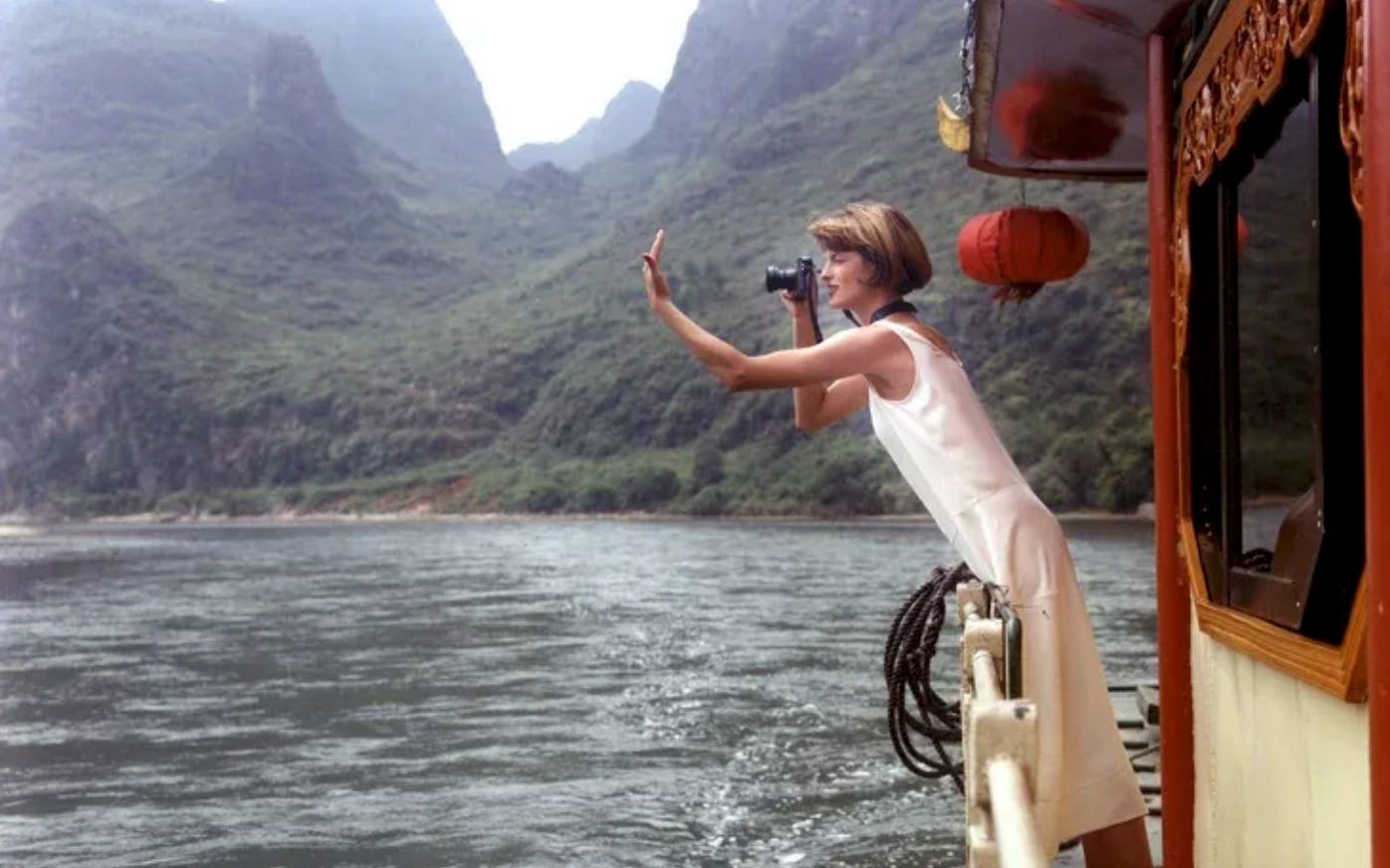
i recently heard somebody describe a walk as a content walk and haven’t stopped thinking about it. not because there is anything wrong with taking photos on a walk or because people shouldn’t document things. the phrase itself just felt oddly revealing. a walk is one of the simplest human activities available to us. for most of history, people went for walks because they wanted fresh air, movement, company, solitude, somewhere to think, somewhere to be. yet somehow we have arrived at a point where a walk can become material. content. proof. something collected and packaged for later. the walk is no longer just the experience, it’s also the evidence that the experience happened.
and that's what unsettled me. because if we have evidence of a life well lived, surely that means we're living one, right?
the eerie thing is that somewhere along the way, many of us became both the protagonist and the audience. people have always cared about appearances of course, we’ve always chased approval, belonging and status. the white picket fence existed long before instagram did. none of that is new. what feels new is the perspective. increasingly, many of us experience life from slightly above. instead of simply having an experience, we become aware of ourselves having it. and instead of asking what something feels like, we start noticing how it looks. the meal arrives and part of us is already framing the photograph. the holiday begins and part of us is already imagining the posts. life acquires an aerial view.
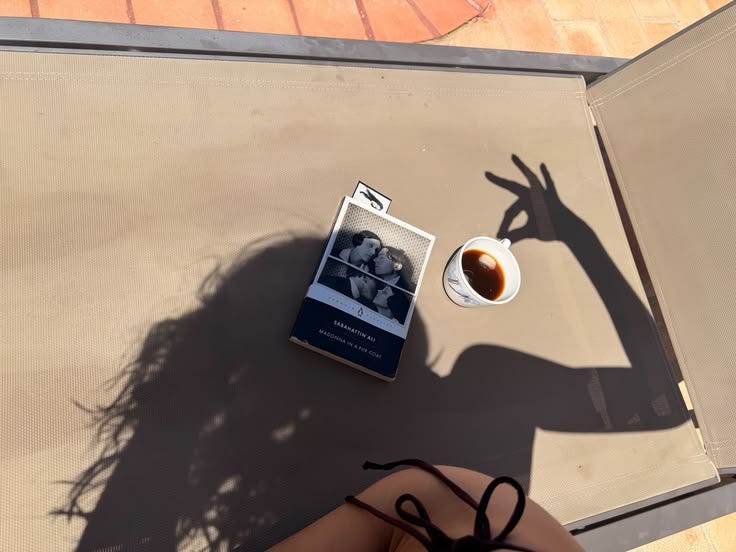
for creators, the line becomes even blurrier. a parcel arriving can become a post, a birthday can become a campaign, a passing observation can become content, ordinary afternoons starts carrying a secondary value. i remember going for a walk many years ago and deciding to document it for future instagram content. not because anything particularly interesting was happening, the walk itself had become secondary. what mattered was capturing proof that i was the sort of person who went on walks and drank iced coffees. i came home with photos and videos of the walk, but somehow less of the walk itself. that was the first time i noticed how easily documentation can start competing with participation.
and none of this is entirely surprising. for the first time in history, documenting your life can literally be a career. entire industries now exist around turning everyday experiences into media; a morning routine can pay somebody’s mortgage, a vacation can become a brand partnership, a relationship can become content. i’m not even sure many of us know exactly how to feel about this yet. some people genuinely enjoy sharing their lives online, others find it exhausting. most of us seem to be negotiating our own line somewhere in the middle, because what makes all of this so complicated is that documenting your life online is no longer just a personal choice. increasingly, it feel like a professional one too.
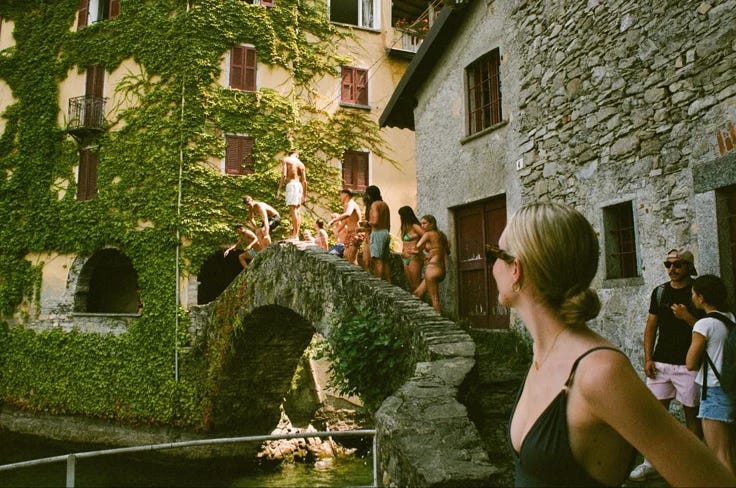
perhaps that’s why phrases like “for the gram” and “pics or it didn’t happen” entered the culture so easily. they sound like jokes, but every joke contains a small truth. proof has become part of the experience itself. sometimes people don’t just document moments anymore. they choose moments because they are documentable.
which raises a slightly uncomfortable question. who is all this proof actually for? other people? future us? the algorithm? ourselves? because sometimes it seems as though the audience barely matters anymore. the habit still survives even when nobody is paying attention. i was watching a therapy show on netflix recently where a woman expressed her husband didn’t love her anymore because he wasn’t posting enough photos of her online. the moment genuinely stopped me in my tracks. not because she was wrong to feel how she felt, necessarily, but because it revealed how tangled the proof and the experience had become. even love has acquired a public layer. the relationship is no longer being measured only by how it feels, but by how often it appears online. visibility itself had become a form of evidence.
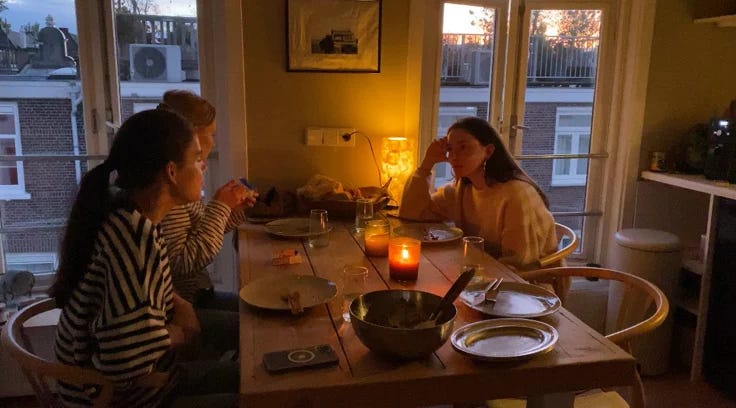
it makes me think about an old friend who stayed in a relationship for far longer than she should have, at least by her own admission. from the outside, the relationship looked magical. there were expensive restaurant photos, weekend city breaks and skiing trips, anniversary posts, lavish gifts, beautiful holidays and matching smiles. eventually, over dinner and drinks, she admitted she had been miserable for almost the entire relationship. and part of what kept her there was the evidence. the relationship generated proof of a good life even though it never felt like one. i haven't stopped thinking about that, because it feels like a very modern problem. confusing the documentation of happiness with happiness itself.
a few years ago, my partner and i were on holiday on a tiny island in the balearics. one evening we wandered into a restaurant and ended up sitting next to a couple. the first thing they did when they sat down was take a selfie together. then they spent the rest of the evening on their phones in silence. when the food arrived, they photographed that too. i remember noticing it because it felt strangely familiar. they weren’t doing anything wrong, they were doing something millions of people do every day. but i couldn’t stop thinking about the gap between the photograph and the experience. because if somebody looked at instagram afterwards, they would have seen evidence of a lovely evening. whether they actually had one felt like a completely separate question.
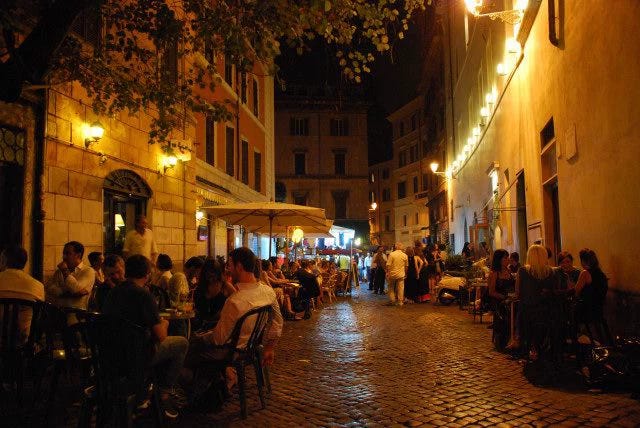
we forget how unusual this moment in history really is. for almost all of human existence, most lives disappeared almost entirely. there might have been a handful of photographs, a few stories in a journal, perhaps a box of letters if you were lucky. but very few people lived with the possibility of an audience following them through ordinary life. we are among the first generations trying to work out what happens when a significant portion of life becomes public by default. which means nobody really knows what it does to a person. we’re all participating in the experiment at the same time.
sometimes i wonder how many beautiful lives we’ll never hear about. people hosting slightly chaotic dinner parties for friends with neon green gravy (true story and i’m still not sure what happened). rereading the same novels for the third time, learning obscure facts about local history, becoming fascinated by birds, bread, astronomy or which bakery makes the best cinnamon bun within a twenty-mile radius. people developing entire worlds of interest that never become content. the internet has made visibility feel important, but some of the richest lives are probably unfolding completely outside of view. not because they’re hiding, because they’re busy being lived.
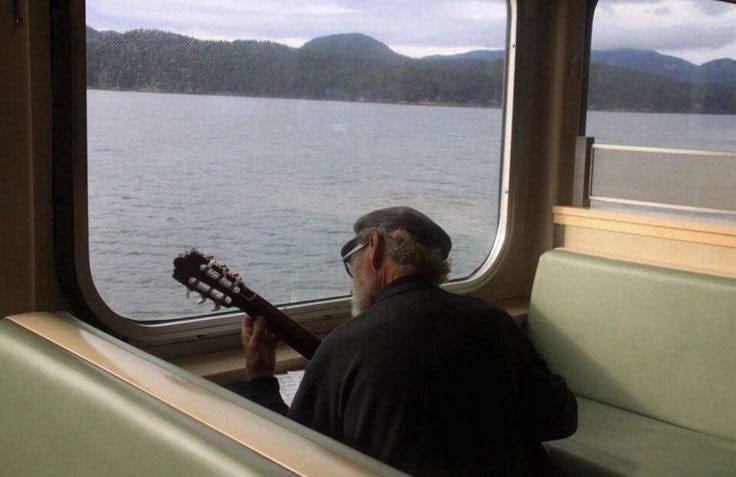
none of this is an argument against documenting life. some of the most treasured possessions i own are family photos of completely ordinary moments; my partner walking down the driveway after a random work day years ago, relatives sitting around a table long before i was born, somebody laughing in the background of a picture nobody thought was important at the time but is now treasured. preserving moments matters, memory is fragile, and photos help us hold onto pieces of lives that would otherwise disappear. the difference is that photo albums were usually trying to remember life. much of modern documentation seems to be trying to prove it happened. those are not always the same thing.
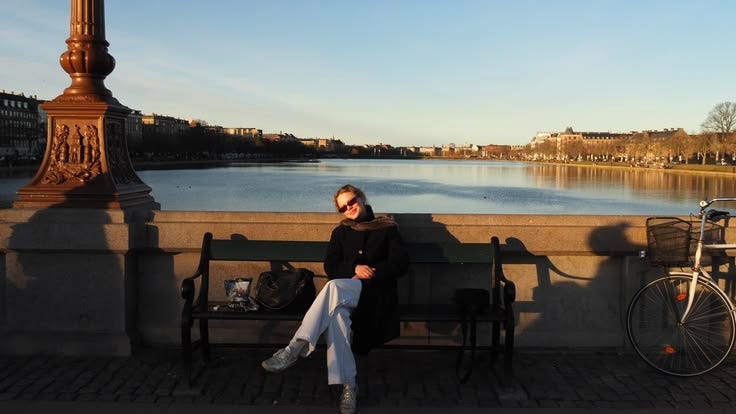
there is a difference between living a life and the proof of one. proof can show where you were, who you were with and what the a part of that moment looked like, but it cannot tell you what it felt like. and increasingly, that feels like the part worth protecting. i don't know about you but want to become more impressive online, i want to become harder to pull away from my own life.
p.s. what's something you love that almost never gets photographed?

keep reading crumbs:


ps. before you scroll away
when you become a paid reader, here’s what lands in your inbox each month:
crumb theory: a soft monthly syllabus to change how you see things
monthly journaling guides: that bring you back to yourself
anti-scroll side quests: that stop you scrolling past your life
deeper essays + practical toolkits: to help you untangle your brain
digital seasonal journaling zine: arriving this summer
plus full access to the archive
and if you’re already here, thank you. it really does means more than you know (◕‿◕)
if crumbs helps you untangle your mind, quiet growth is where you start building something from it, with your own voice, ideas, rhythm, into something that quietly becomes yours. it’s there whenever you’re ready to explore your creativity further ♡
I love this. I hate going to concerts and everyone has their phone out recording. So much of music is the feeling and I can't get that through my screen.
It reminds me of the time I traveled to Ireland in 2011. I picked a day where I wouldn't take a single photograph -- the day we visited the Aran Islands. All around that island, I stopped and took "mental pictures" where I closed my eyes and remembered the moment. You know what day I remember best of that whole trip? The Aran Islands.
Life is better experienced without a screen.
Loved this. Made me think about how women have historically been trained to constantly be aware of how they are perceived by others, particularly men. Focusing on how you are experiencing the world, rather than how the world is perceiving you, breaks away from this conditioning and is so freeing. Like reframing yourself as a agentic person rather than an object for others to consume.